Septic Tank Emptying Services
- 24/7 Emergency Response
- Same-Day Service
- 2-Hour Response Time
- No Call-Out Fees
Need your septic tank emptied? Contact us today for a free quote.

Request a Call Back
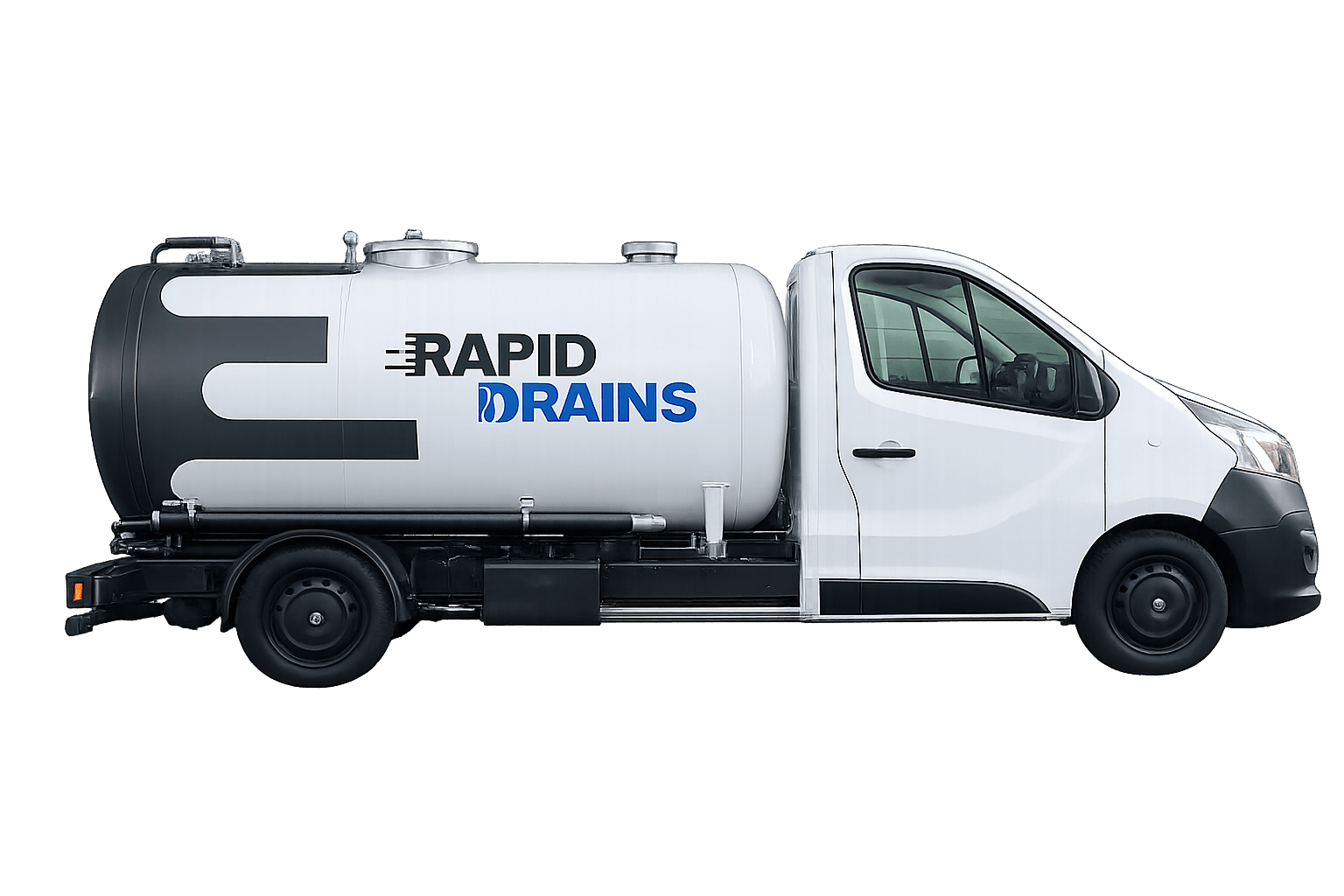
Septic Tank Emptying
If your property uses a septic tank, cesspit or small sewage treatment plant, regular emptying and maintenance are essential to prevent loss of capacity, overflows, odours and damage to downstream drainage.
Rapid Drains provides tanker-based waste removal and maintenance for:
- Septic tanks: Desludging before solids exceed the tank's working capacity, helping protect treatment performance and the drainage field.
- Cesspits: Regular emptying of sealed holding tanks before they overflow.
- Small sewage treatment plants: Desludging and maintenance in line with the manufacturer's requirements.
We can also investigate blocked inlet or outlet pipework, poor flow, recurring odours and signs that a drainage field is no longer accepting effluent properly.
Septic Tank Installation
For properties without a suitable connection to the public foul sewer, a correctly designed private wastewater system may be required. The right solution depends on occupancy, daily flow, ground conditions, available space, groundwater and the proposed discharge route.
Where a septic tank is used, treated effluent should pass to ground through a suitable drainage field rather than directly to a watercourse. In some locations, a small sewage treatment plant may be the more appropriate option.
- Site Assessment: Review access, ground conditions, existing drainage and the proposed discharge location.
- Correct Sizing: Match tank capacity and the downstream system to the property's expected wastewater flow.
- Installation & Connection: Excavate, position and connect the tank and associated pipework correctly.
- Drainage Field or Treatment Solution: Provide the appropriate downstream arrangement for the system and site.
Any new installation should be designed around the applicable environmental, planning and building-control requirements for the property.
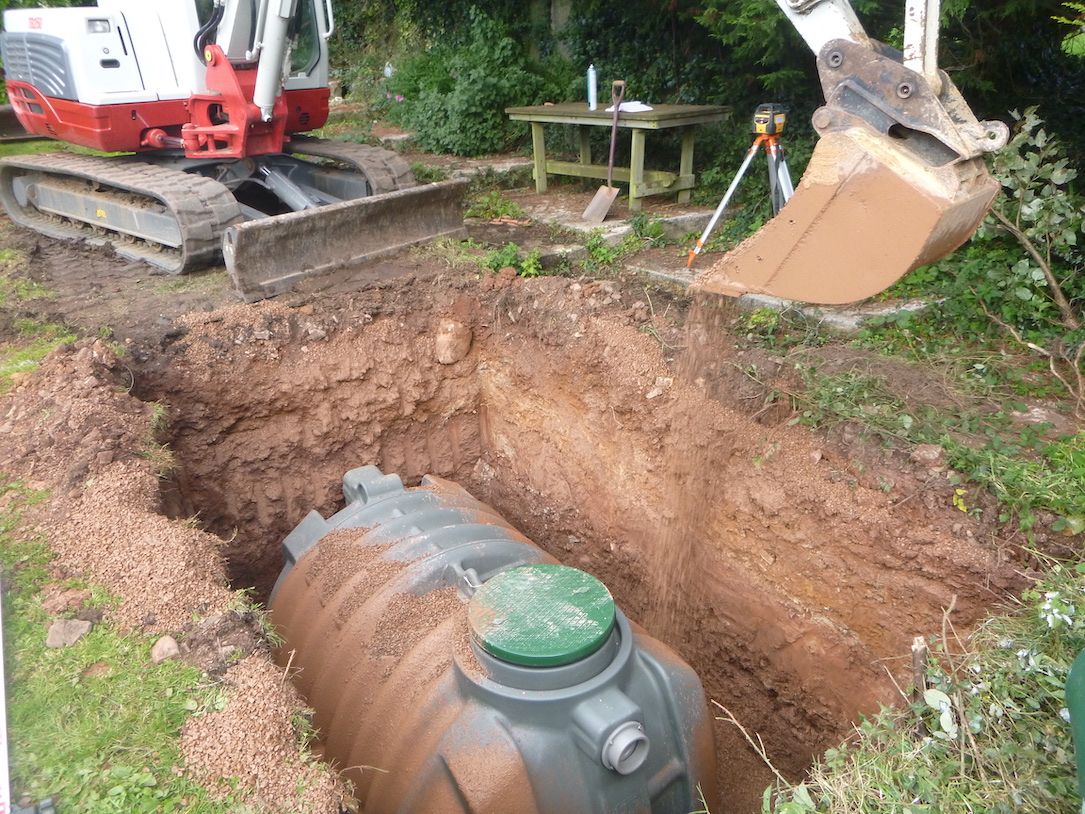
Private Wastewater Systems & Drainage Fields
Private wastewater systems need the right combination of treatment, discharge, access and ongoing maintenance. Rapid Drains works with septic tanks, cesspits, drainage fields and small sewage treatment plants to help keep systems working reliably.
- Drainage Fields: Inspection and maintenance of infiltration systems that receive treated effluent from suitable septic tanks or treatment plants.
- Klargester Systems: Inspection, servicing and repair of suitable Klargester wastewater treatment equipment.
- Small Sewage Treatment Plants: Maintenance, desludging and fault investigation for package treatment systems.
Where a system is failing, overflowing or draining poorly, we can investigate the cause and recommend the most appropriate next step.
Why Maintain a Sewage Treatment Plant?
Small sewage treatment plants use biological treatment, often assisted by mechanical aeration, to treat wastewater to a higher standard than a conventional septic tank. They still need regular servicing, desludging and inspection to remain reliable.
Good maintenance helps protect treatment performance, reduce the risk of breakdowns and identify faults before they lead to pollution, odours or costly disruption.
- Reduce Breakdowns: Routine servicing and desludging can identify worn components, excess sludge and developing faults before they cause a complete failure.
- Support Compliance: Keeping the system in good working order, following the manufacturer's requirements and maintaining appropriate records helps support compliance with the rules that apply to the discharge.
- Protect the Discharge System: Correct treatment and regular sludge removal reduce the risk of solids carrying over into downstream drainage and causing damage or pollution.
- Keep Useful Maintenance Records: Service and emptying records make it easier to track recurring faults, plan future maintenance and provide useful information when the property changes hands.
Our Services



Septic Tank Emptying FAQs
How Often Should a Septic Tank Be Emptied?
In England, current Environment Agency guidance says sludge should be removed before it exceeds the system's capacity and that septic tanks or treatment plants should generally be desludged at least once a year or in line with the manufacturer's instructions. The actual interval can vary with tank size, occupancy, water use and sludge accumulation.
What Is the Difference Between a Septic Tank, Cesspit and Sewage Treatment Plant?
A septic tank separates solids from wastewater and normally discharges treated effluent to ground through a drainage field. A cesspit is a sealed holding tank with no treatment or discharge, so it needs regular emptying. A small sewage treatment plant uses biological treatment, often with mechanical aeration, to treat wastewater to a higher standard.
What Are the Signs That a Septic Tank May Need Emptying?
Warning signs can include slow drainage, gurgling, foul odours, sewage backing up, unusually high liquid levels or wastewater surfacing around the tank or drainage field. These symptoms can also indicate a blockage, damaged pipework or a failing drainage field, so an inspection may be needed as well as emptying.
Can Septic Tank Effluent Discharge Into a Soakaway or Watercourse?
In England, septic tank effluent should discharge to ground through a suitable drainage field. A rainwater soakaway is not the same as a drainage field, and septic tank effluent must not discharge directly to a watercourse. The correct arrangement depends on the site and the rules that apply to the discharge.
What Happens During Septic Tank Emptying?
The tanker accesses the tank and removes accumulated sludge and wastewater as required. The engineer may also check for obvious signs of damage, blocked inlet or outlet pipework, abnormal liquid levels or other issues that could affect performance.
Emptying restores working capacity, but it does not repair structural defects or a failing drainage field. Where there are recurring problems, further inspection may be recommended.

Common Drainage Problems That Can Affect Wastewater Systems